
What Is Automatic Asset Extraction (AAE)?
Updated on
August 27, 2026
Automatic Asset Extraction (AAE) is the technology that moves institutional digital assets to safety without needing their private keys. It uses transactions that are signed and kept up to date in advance, so that when a wallet is compromised or you can no longer reach it, those transactions can sweep the assets to a vault you approved beforehand.
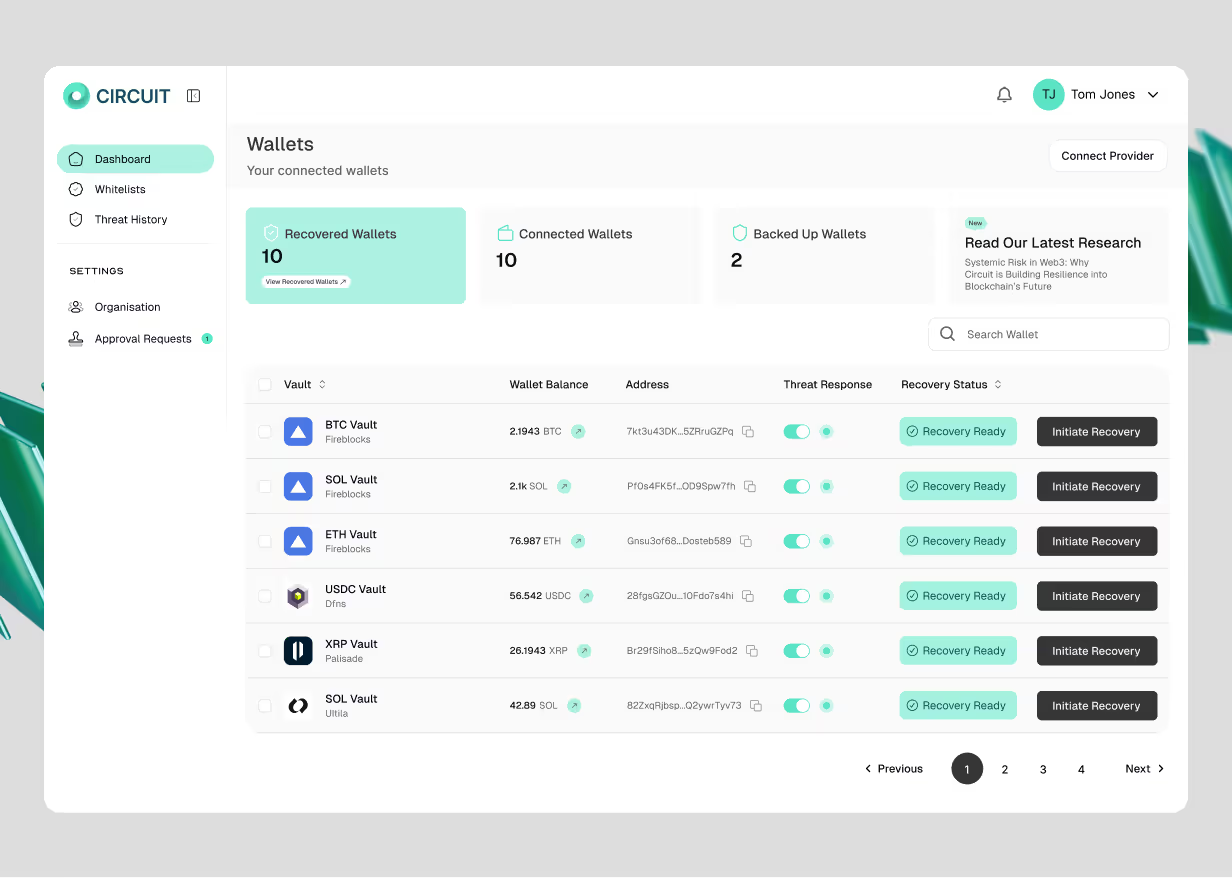
AAE is Circuit Security's core recovery technology. It powers two of Circuit's products: Recovery, which brings assets back after loss or failure, and Response, which stops an attack in progress. Circuit's third product, Key Backup, is separate trustless encrypted storage and does not use AAE. AAE works alongside your existing custody setup rather than replacing it, and it never holds or rebuilds private keys.
How Automatic Asset Extraction works
- An institution sets its recovery destinations in advance: approved vault addresses that assets can be swept to.
- Circuit keeps a set of signed transactions ready to move assets from the monitored wallets to those vaults. It updates these transactions as balances, nonces, and network conditions change, so a working recovery path is always in place.
- When a defined trigger occurs, such as a wallet being compromised, keys being lost, a signer being unavailable, or infrastructure failing, the right transaction is broadcast to the network.
- Assets settle into the approved vault. No private key, seed phrase, or manual signing is needed at the moment of recovery.
Why it matters
Most institutional security spending goes to prevention: custody, key management, and access control. Prevention protects your ability to sign transactions. It does nothing once keys are lost, an operator is locked out, or an attacker already controls the wallet. That is the Respond and Recover gap in the NIST CSF 2.0 framework, and it is where assets are actually lost. AAE closes that gap by setting up recovery in advance rather than leaving it to a scramble after an incident.
What AAE is not
Circuit is not a custodian and cannot access, use, or reconstruct your keys. AAE does not chase down funds after an attacker has already stolen and moved them. It moves assets to safety using recovery paths that are set up in advance, before any incident.
Frequently asked questions
Does Automatic Asset Extraction require private keys?
No. AAE recovers assets without access to private keys or seed phrases. The recovery transactions are signed and approved in advance, so no key material is needed at the time of recovery.
Is AAE a custody solution?
No. Circuit is not a custodian and cannot access, use, or reconstruct your keys. AAE is a recovery technology that works alongside your existing custody and key management setup.
When is Automatic Asset Extraction triggered?
AAE is triggered by defined events such as a wallet being compromised, keys being lost, a signer being unavailable, or infrastructure failing. On trigger, a transaction signed in advance sweeps assets to a vault you approved beforehand.
Can AAE recover funds already stolen in a hack?
AAE moves assets to safety using recovery paths set up in advance. It is not a way to trace funds after the fact, which is why it must be in place before an incident occurs.
Want to keep up to date with Circuit? Sign up below
Related Posts
Discover more key terms relevant to Circuit
What Is an MPC Wallet?
An MPC wallet uses multi-party computation to split a private key into shares, so no single location holds a complete key. It is access control, not recovery.
What Is RTO / RPO for Digital Assets?
In digital asset operations, RTO is how fast you must regain control of assets after a failure and RPO is how much recoverable state you can afford to lose. Keyless recovery makes aggressive targets achievable.
What Is a Pre-Signed Transaction?
A pre-signed transaction is a blockchain transaction authorized in advance and held until a trigger broadcasts it, the mechanism behind keyless asset recovery.
Built by experts who’ve made digital assets safer, and now, recoverable
We believe asset recoverability is table stakes for the next era of digital assets.


© 2026 Circuit Security - All rights reserved
